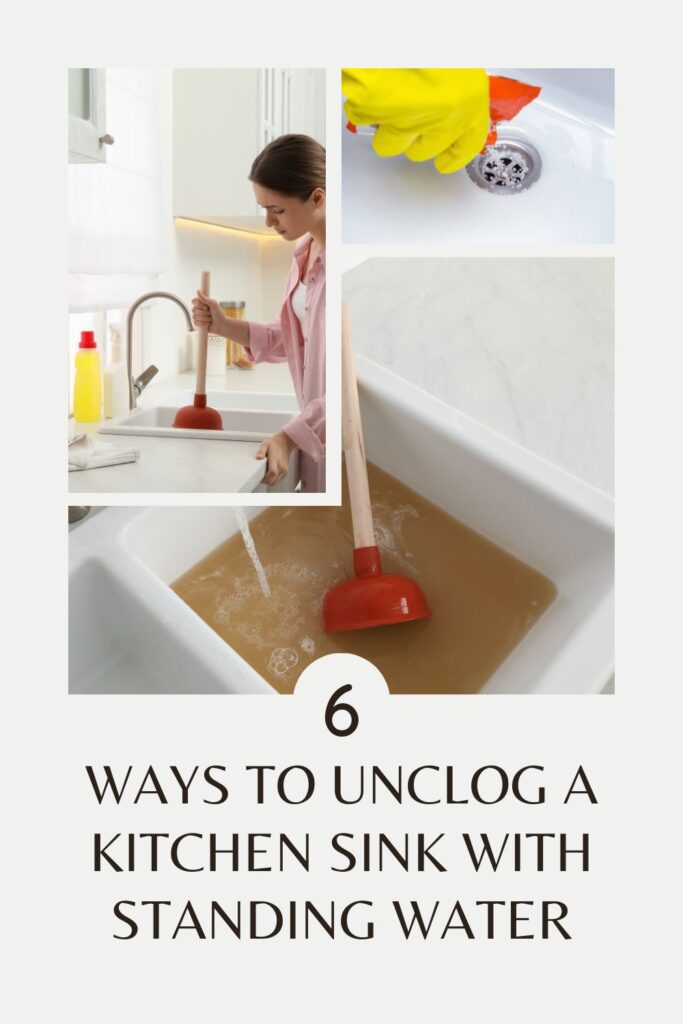
A clogged kitchen sink with standing water can disrupt your daily routines and quickly turn into a frustrating issue. Before calling a professional plumber, there are several effective methods you can try at home to restore your kitchen sink drain to its original state. From using boiling water to a plumbing snake, this guide will help you explore the best methods for tackling a clogged sink drain and preventing future clogs.
Assess the Situation
The first thing to do when you notice standing water in your sink is to identify the severity of the clog. Check for food particles, soap scum, or food scraps that might be visible around the drain hole. If you have a double sink, see if both sides are draining slowly or completely blocked. This step helps you decide on the next step for unclogging your kitchen drain.
Use Hot Water or Boiling Water
For small clogs or partial blockages, hot water can sometimes work wonders. Here’s how:
- Heat a pot of water to a rolling boil.
- Carefully pour the boiling water directly into the kitchen sink drain.
- Wait for a few minutes to see if the water drains.
Repeat this process a few times to dislodge minor clogs caused by grease, soap scum, or coffee grounds. Hot tap water can also work for clearing softer build-ups, though it may require more time and repetition.
Try Baking Soda and Vinegar
One of the easiest methods to unclog a drain is using a natural DIY solution made from baking soda and vinegar:
- Pour a cup of baking soda into the drain hole.
- Follow it with a cup of white vinegar or apple cider vinegar.
- Let the mixture fizz for about 15 minutes.
- Flush the drain with boiling water to clear any loosened debris.
This combination is particularly effective for removing soap scum and food remnants while neutralizing sewer gases.
Use a Toilet Plunger
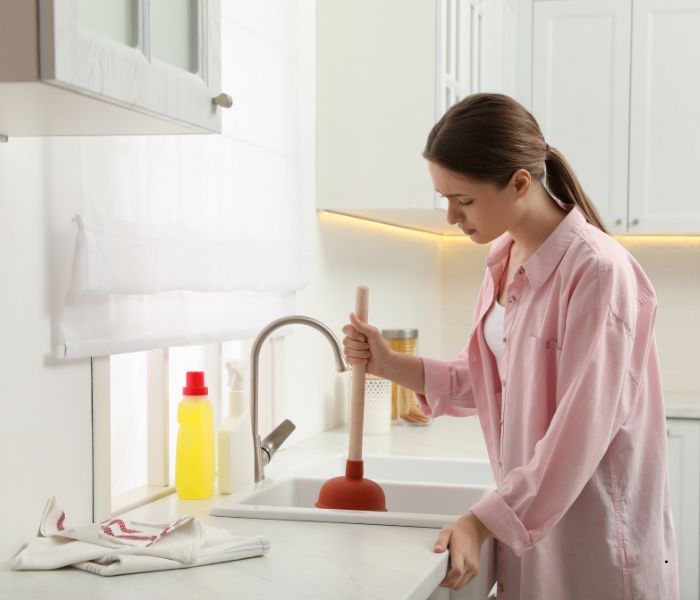
A toilet plunger can create a water-tight seal to build water pressure, which may push the clog out of the kitchen sink pipe.
- Remove the sink stopper and any visible debris.
- Fill the sink with a few inches of water to ensure enough water for the plunger to work effectively.
- Place the plunger over the drain hole and plunge up and down with steady pressure.
This method is particularly useful for double kitchen sinks. Block the other side with a wet cloth to ensure a strong seal.
Use a Wire Coat Hanger or Drain Snake
For more stubborn clogs, a wire coat hanger or plumber’s snake is a handy tool:
- Wire Coat Hanger: Straighten the hanger, leaving a small hook at one end. Insert it into the kitchen sink drain to fish out food particles or other debris.
- Plumbing Snake: Available at hardware stores, this tool is more effective for clearing deep clogs. Insert the drain snake into the drain line and rotate it to catch and remove blockages.
Remove and Clean the P-Trap
The P-trap, a U-shaped pipe beneath the sink, often collects food scraps, grease, and other debris that contribute to clogs.
- Place a bucket under the P-trap to catch water.
- Use an Allen wrench or your hands to loosen the trap’s connectors.
- Empty the trap and clean it thoroughly before reattaching it.
This is one of the best methods for dealing with clogs caused by heavy build-ups.
Use a Wet-Dry Vacuum
A wet-dry vacuum can be a powerful tool for unclogging a kitchen sink clog.
- Set the vacuum to “wet” mode.
- Seal the drain cover with a wet cloth or the vacuum’s attachment to create a strong suction.
- Turn on the vacuum to suck out the clog.
This method works well for clogs caused by food particles or food remnants.
Avoid Using Chemical Cleaners
While chemical drain cleaners can sometimes clear clogs, they may damage PVC pipes or lead to water damage if misused. Opt for natural solutions or mechanical methods instead.
Call a Professional Plumber
If none of these methods resolve the issue or if you’re dealing with persistent clogs, it may be time to seek professional help. A plumber with years of experience can diagnose the issue and ensure your plumbing system is in good condition.
Prevent Future Clogs
Regular maintenance can keep your sink running smoothly:
- Avoid pouring grease, coffee grounds, or food scraps down the drain.
- Use a drain cover to catch debris.
- Run hot water through the drain after each use.
- Clean the sink trap periodically to prevent build-up.
For those with a garbage disposal unit, run it regularly with ice cubes and a small amount of hot tap water to keep the blades clean and sharp.
Final Thoughts
Unclogging a kitchen sink with standing water doesn’t have to be overwhelming. From using a plumber’s snake to the power of boiling water, there are different methods for every type of clog. By following these steps and maintaining your sink regularly, you can avoid future clogs and keep your kitchen drain in top shape.